How-To: Needle Felted Pumpkin

With autumn right around the corner, I thought it would be fun to share a quick and easy project.

Needle Felted Pumpkin

Materials

Feltable wool – orange, dark orange, light green and dark green (There are a lot of wool options out there for felting. I find the best type of wool for felting has been carded, but NOT combed. It is sometimes sold in a batt).

You will also need a felting needle (I prefer to use a coarse needle for shaping and a fine needle for details).

Optional: Felting pad (this may make some of the detail work easier, and save your fingers from possible pokes)

General Needle Felting Tips

There is no right way to needle felt. The technique is fairly straightforward. Take a barbed needle to some wool and it will start to become more compact. The more poking you do in one area, the denser the wool will become. Soon and object will start to take shape.

I usually shape with my hands before felting. If the object you are making is round, start with a roundish shape of wool— one that’s been pulled together tightly. (If you start out with a loose “cloud” of wool, it might take awhile before you start to get the wool to felt together.)

Layering the wool will help you build up a form that is also firm and compact. The end result will hold its shape better and be easier to add details to.

Step-by-step Instructions

IMageSteps

1. Start by rolling up a small piece of orange wool.

2. Try to keep the roll together.

3. With a coarse needle, start felting around the entire shape, making sure to poke in any loose pieces.

4. You should end up with a small, flattened ball.

5. With another piece of orange wool, wrap the felted ball (from steps 1-4), in the same manner as before, making sure to hold it together.

6. With a coarse needle, felt around the entire shape, making sure to poke in any loose pieces.

IMageSteps2

7. With another piece of orange wool, wrap the felted ball (from steps 5-6), in the same manner as before, making sure to hold it together.

8. With a coarse needle, felt around the entire shape, making sure to poke in any loose pieces.

9. Shape as necessary so as to resemble a slightly flattened ball

10. Using the coarse needle and starting at the top center, needle felt a ridge down one side to the bottom center.

11. Turn pumpkin around and repeat.

12. Turn pumpkin and repeat as necessary for desired number of ridges.

IMageSteps3

13. Take a small amount of the dark orange wool.

14. Pull and twist a small bit of wool. This will be used to emphasize the ridges. Make a piece that is slightly longer than pumpkin circumference.

15. Starting at the top center, poke one end of the twisted wool and start working your way down one side, felting it into the ridge.

16. Fill in all the ridges, starting at top and working all the way around.

17. See the pumpkin taking shape?

18. Take a small piece of dark green wool, and with a dampened finger, roll back and forth, favoring one end to make a conical shape.

IMageSteps4

19. Work the thinner end of the stem into the top of the pumpkin, poking until it is very secure.

20. With a very small piece of light green wool, carefully flatten the top of the stem, while shaping and working in the light green piece.

21. With a very small piece of dark green, work a small piece into the bottom of the pumpkin, covering up center with a small circle of dark green.

Finished! That wasn’t so bad, was it? Time to make another! Or, if you want someone else to make one for you, you can order one or more from my shop.

Another Start

Fountain

Believe it or not, I am going to give this another shot. As busy as things have been, I do sometimes miss stepping back a little, capturing some thoughts, tidbits, and the occasional photo.

Our lives continue to revolve around being makers, and there is an intentional simplicity that is behind a lot of our decisions (not to mention that we just like the process of creating and filling our home with the things that we make). Increasingly, though, I am confronted with the fact that we are becoming more and more disconnected from the sources of our own well being—our food, our clothing, our shelter. Convenience plays a big part in the reason why this is happening. And, I am the first to admit that I appreciate the convenience that comes from living in a society built on mass-production.

However, it is hard to ignore, nor do I want to, the inequalities that exist in a post-industrial society, or the waste that is generated by living in a culture of disposability. These things exist and are a drain on resources and on our environment. Part of my hope with rekindling this blog is to nurture appreciation for the things that we do own, or plan on consuming in the days to come. Through the act of making, I would like to encourage us to take the time to consider the basic needs of our lives, and weigh the true costs of the stuff that we accumulate and use while going about our days.

Through sharing projects and inspiration, perhaps we can gain a little more understanding about the process and origins of the things we use. And, maybe, be OK with a little inconvenience in exchange for unique, handmade (by scratch!) goods and experiences to fill our lives.

The saga of the linen towels

When Quince launched Sparrow it just came in natural and I fell in love. I ordered some, and when it came I thought about how beautiful linen towels would be, so I bought some more…

Then I realized how insane it would be to knit towels on such tiny needles, so I decided I would try to weave them. I had done some weaving in college and with the help of a refresher private lesson or two I thought I would be good to go. So I rented a floor loom for a couple of months. That first lesson revealed I would need to buy a lot more Sparrow, so much more due to the loom waste that it was just too excessive.

V weaving

So, I did what any fiber lover would do, I bought more linen, much, much finer and more suitable to weaving. And I wove a set of towels…

Linen Towels

Linen Towels

Linen Towels

But I still had my Sparrow..

I thought it would be cool to knit them after all, but approach it like a meditation, to knit just a couple rows a day, or about 20-30 minutes. I started on a Winter Solstice… I actually stuck with it through both bath towels and into the hand towel but somewhere about October I got distracted and lost my mojo, so the project marinated for over a year.

Linen Towels

I finally dug it out this winter and finished the hand towel and one wash cloth. All seed stitch, all on 3mm needles. This is by far the craziest project or pair of projects I have ever done, but I love both sets!

Linen Towels

Brego

This time of year the garden is a great source of pleasure and pain! The weeding seems never-ending, the creeping things creep, the spreading things spread, but there’s also plenty of blossoming and blooming and plants beginning to bear fruit.

Milkweed Blossom

Wee Tomato

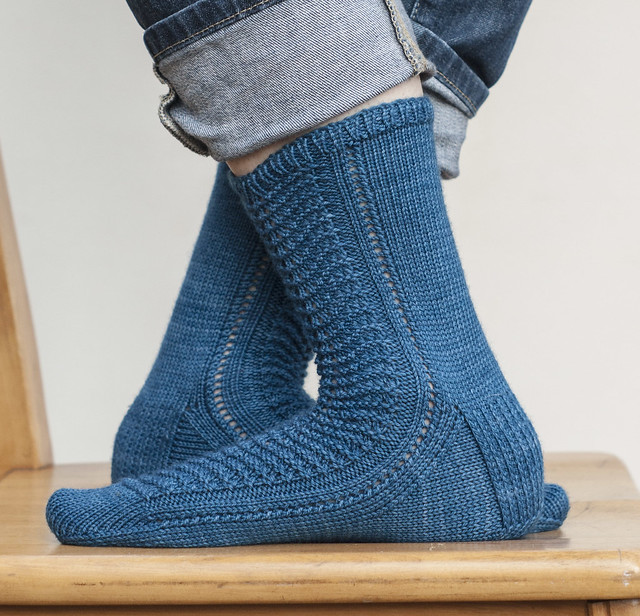
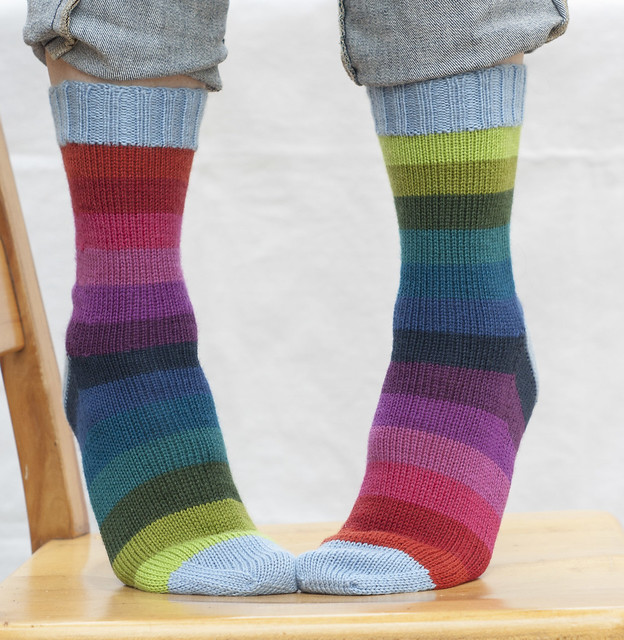
When we’re not stuffing our faces with the vegetable and fruit bounty, I have been knitting a bit. I have a new pattern, Brego, which is 25% until July 5 (no coupon code needed). I had the chance to use the lovely 4-ply sock yarn from Ancient Arts in the beautiful color Chocolate Lab.

Brego Socks

Brego Socks

Even with the darker color, this yarn shows the stitch pattern pretty nicely.

Linen Tank

Since I last posted, I also finished my version of Hane in Shibui Linen.

Grilling Veggies

Hope you are enjoying the bounty of the season as much as we are!

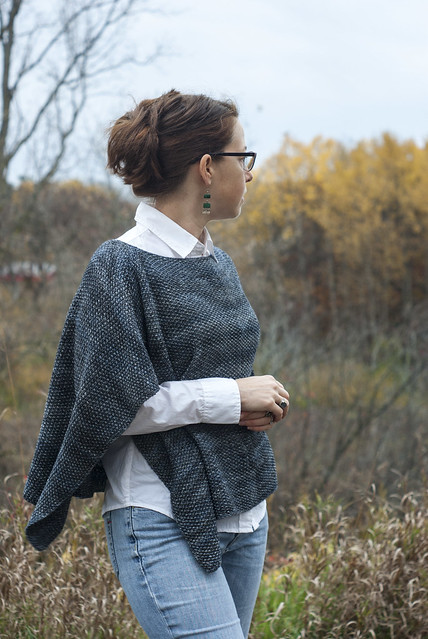
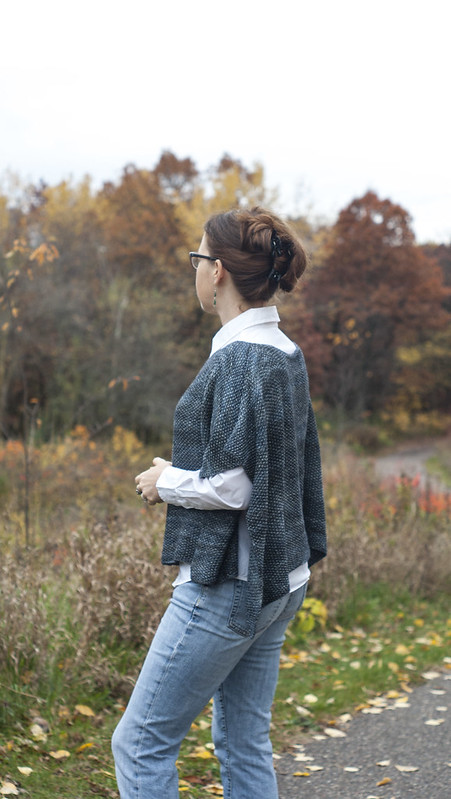
Alice’s Capelet

Alice's Capelet

Ok, it’s a little warm out to wear this now, but I have had the idea for this Capelet for a long time, and since it uses just one skein of Cascade Ecological wool, it was a pretty quick knit! It almost makes me ready for Fall!

Alice's Capelet

Alice’s Capelet 25% off until June 21, 2015, no coupon code needed.

Dan and I are off this week, planning on a mix of projects and fun during our “staycation”!